Leave Your Message
Picking out the right loading truck isn’t just about chasing the flashiest model—honestly, it all starts with understanding your cargo, your route, and the loading environment. That's what really matters, not just a fancy badge on the side. People—whether they’re in local fleets or shipping internationally—often compare different kinds of trucks like flatbeds, box trucks, curtain-side, refrigerated units, dump trucks, or hook-lifts. Each one’s designed to handle specific kinds of loads and situations.
Then, there’s the whole picture. The World Bank’s 2023 Logistics Performance Index points to things like infrastructure quality, shipment reliability, tracking systems, and overall logistics expertise as key factors impacting supply chains—and these days, that stuff really shows up at the loading dock. For example, a curtain-side truck can save some time when loading palletized goods, and refrigerated trucks are a lifesaver for keeping temperature-sensitive products safe, especially when crossing borders. Flatbeds are great for oversized or heavy items like steel or machinery. But here’s the deal—pay attention to the little things, like dock height, payload limits, axle capacity, turning radius, and whether the body and equipment match your loading needs.
Looking ahead, the International Transport Forum’s Transport Outlook 2024 predicts that global freight demand will keep climbing through 2050. So, you'll want trucks that can handle your current workload and also scale up as you grow. Also, the International Energy Agency reports that electric trucks are gaining more ground globally—big in China, for instance—but diesel still plays a huge role, especially for long hauls and areas where charging stations are scarce. And let’s not forget, having good local service support and parts availability isn’t an option—it’s a necessity.
This guide looks at the best loading trucks across different markets, freight types, and operating conditions. I’ve included things like payload capacity, body design, fuel options, maintenance needs, safety features, and the overall cost of ownership. Honestly, there’s no one-size-fits-all answer. I personally tend to favor flexible truck bodies, but that might not work for everyone. Plus, some fleets underestimate how important driver training and proper loading discipline really are. Skimping on those areas can wipe out the benefits of even the nicest, most expensive trucks. To get it right, you’ve got to perform thorough technical inspections, verify suppliers, and crunch the numbers on route data before you place any orders—that’s how you make sure you’re making smart choices.
2026 Best Types of Loading Trucks for Global Buyers
2026 Loading Truck Taxonomy: U.S. FHWA Classes 1–8 by GVWR
The U.S. Federal Highway Administration classifies trucks by Gross Vehicle Weight Rating, or GVWR. This rating means the maximum permitted loaded weight, including cargo, passengers, and equipment. It is not the truck’s empty weight. FHWA Highway Statistics places Class 1 below 10,000 pounds. Class 2 covers 10,001–19,500 pounds, while Class 3 spans 19,501–26,000 pounds. These lighter Loader Loading Trucks suit urban delivery, warehouse transfer, and compact construction work.
Class 4 reaches 33,000 pounds. Class 5 extends to 50,000 pounds. Class 6 covers 50,001–70,000 pounds. Class 7 runs to 80,000 pounds, and Class 8 exceeds that threshold. These categories help global buyers compare chassis strength, axle capacity, and loading equipment before reviewing local specifications. The FHWA definition is a useful baseline, but regional road limits may differ.
Duty cycle matters more than appearance. The U.S. Census Bureau’s 2021 Vehicle Inventory and Use Survey tracks body type, annual mileage, and operating range. Buyers should compare those factors with expected load density and loading frequency. A Class 6 truck may handle dense pallets well, yet waste fuel on short urban routes. That judgment is easy to miss. I would verify axle ratings, payload calculations, and certification documents before purchase. Gross dimensions alone can mislead.
A buyer-oriented comparison of U.S. vehicle weight classes and common loading-truck configurations. GVWR means Gross Vehicle Weight Rating and includes the vehicle, occupants, fuel, body, equipment, and cargo.
| U.S. Class | GVWR Range | Typical Loading Truck Type | Best-Fit Loading Applications | Indicative Payload Range | Typical Body or Loading Equipment | Global Buyer Considerations |
|---|---|---|---|---|---|---|
| Class 1 | Up to 6,000 lb (up to 2,722 kg) |
Compact pickup, small cargo truck, light-duty utility vehicle | Small parcels, tools, maintenance materials, retail deliveries, and short-distance urban loading. | Approximately 1,000–2,000 lb (454–907 kg) |
Open cargo bed, enclosed box body, light tailgate, or small utility body. | Highly maneuverable and suitable for narrow streets; payload depends strongly on cab, body, and equipment weight. |
| Class 2 | 6,001–10,000 lb (2,722–4,536 kg) |
Light-duty pickup, panel truck, compact box truck | Local distribution, service operations, construction supplies, appliance delivery, and light warehouse transfers. | Approximately 1,500–4,000 lb (680–1,814 kg) |
Box body, dropside bed, stake body, light liftgate, or service compartment body. | Offers a practical balance between urban access and cargo capacity; check local licensing and axle-load requirements. |
| Class 3 | 10,001–14,000 lb (4,537–6,350 kg) |
Medium-duty cab-over or conventional truck | Regional parcel delivery, food distribution, landscaping materials, municipal work, and mobile workshops. | Approximately 3,000–6,000 lb (1,361–2,722 kg) |
14–18 ft box body, dropside body, stake body, refrigerated body, or hydraulic liftgate. | Suitable for frequent loading cycles; body length and rear-axle rating should be matched to the cargo center of gravity. |
| Class 4 | 14,001–16,000 lb (6,351–7,258 kg) |
Medium-duty delivery truck or urban straight truck | Heavier retail distribution, beverage delivery, building materials, waste collection, and public-works operations. | Approximately 5,000–8,000 lb (2,268–3,629 kg) |
16–20 ft box body, curtain-side body, dropside platform, liftgate, or compact tipper body. | Good for dense urban routes requiring more cargo volume without moving to a heavy truck platform. |
| Class 5 | 16,001–19,500 lb (7,259–8,845 kg) |
Medium-duty box truck, flatbed truck, or vocational truck | Construction products, palletized freight, regional distribution, equipment transport, and heavier service loads. | Approximately 6,000–10,000 lb (2,722–4,536 kg) |
18–22 ft box or flatbed, crane body, dump body, high-capacity liftgate, or refrigerated body. | Allows greater body and equipment flexibility; confirm braking, suspension, and local road-weight compliance. |
| Class 6 | 19,501–26,000 lb (8,846–11,794 kg) |
Heavy medium-duty straight truck | Large-volume delivery, refuse collection, concrete-related support, public works, and regional industrial logistics. | Approximately 8,000–14,000 lb (3,629–6,350 kg) |
20–26 ft box body, roll-on/roll-off equipment, dump body, hooklift, crane body, or heavy liftgate. | Often selected when substantial payload is needed while remaining below the U.S. 26,001 lb heavy-truck threshold. |
| Class 7 | 26,001–33,000 lb (11,795–14,969 kg) |
Heavy straight truck or vocational loading truck | Municipal collection, heavy construction materials, machinery transport, bulk delivery, and specialized loading work. | Approximately 12,000–20,000 lb (5,443–9,072 kg) |
Flatbed, dump body, refuse body, concrete-related body, heavy crane, or specialized loading platform. | Requires careful review of commercial registration, axle spacing, bridge formulas, and road-access restrictions. |
| Class 8 | Over 33,000 lb (over 14,969 kg) |
Heavy-duty straight truck, tractor-trailer, or specialized heavy hauler | Long-haul freight, oversized machinery, bulk commodities, container transport, heavy construction, and industrial logistics. | Approximately 20,000–80,000+ lb (9,072–36,287+ kg) |
Trailer combination, container chassis, lowbed, platform trailer, bulk tanker, dump trailer, or heavy-duty crane body. | Highest capacity and configuration flexibility; applicable limits may be governed by axle weight, bridge formulas, dimensions, and route permits. |
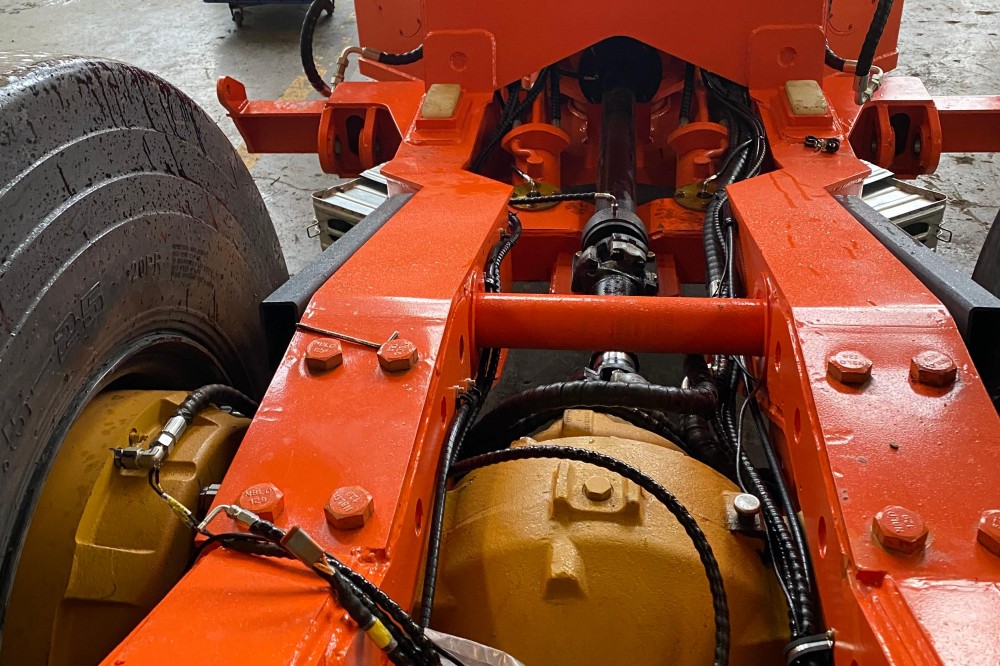
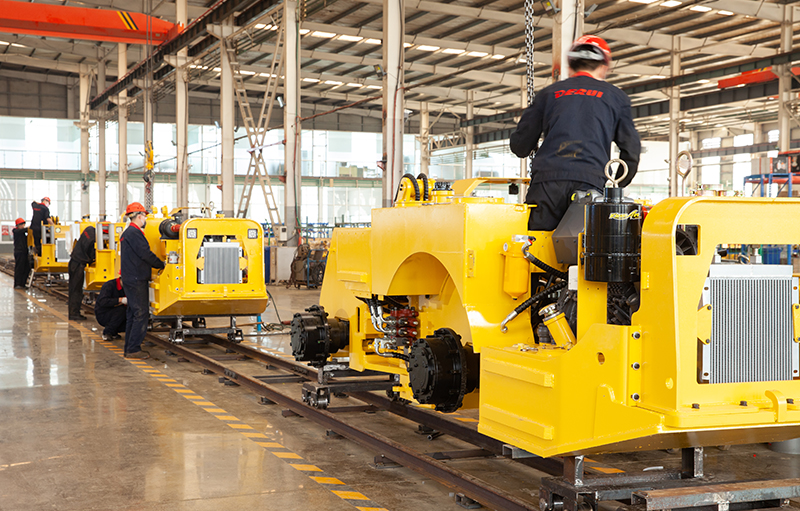
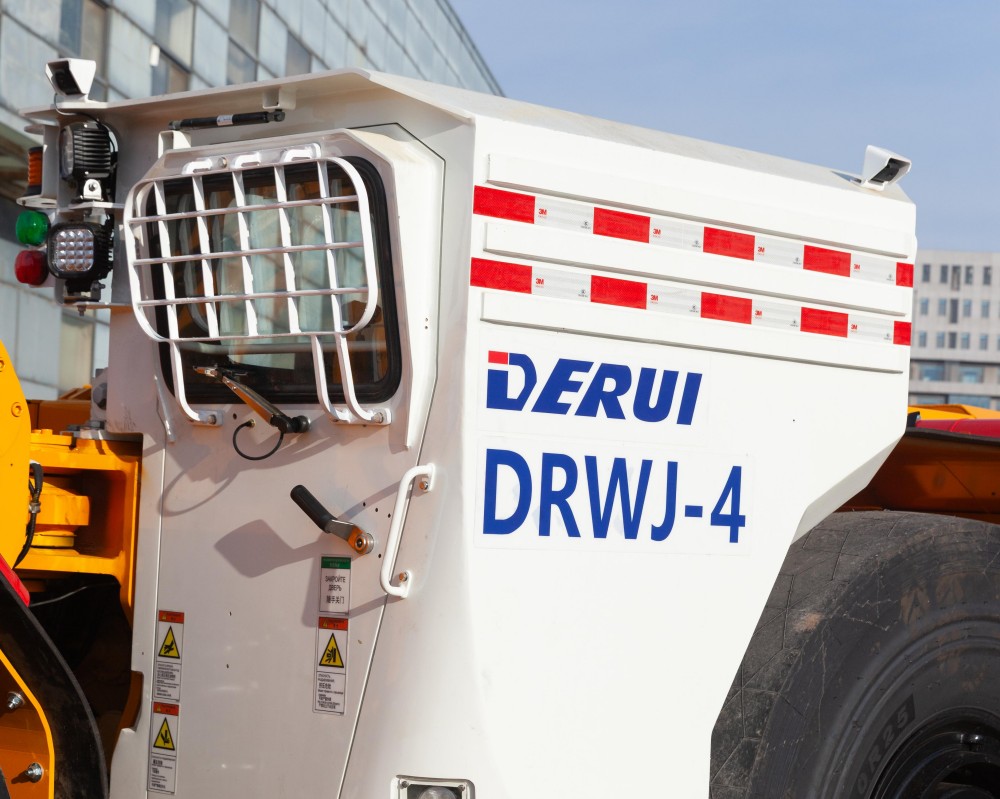
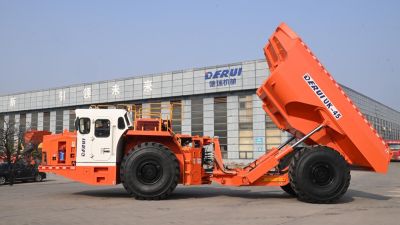
The DRUK-45 Underground Dump Truck is a compact diesel-powered solution designed for demanding underground mining operations. With a payload capacity of up to 45 tons, it helps improve material transport efficiency while maintaining a practical size for confined working environments. The truck can operate in underground tunnels with a minimum cross-sectional area of approximately 5 by 5 meters, making it suitable for mines where maneuverability and space utilization are essential.
Its front axle oscillation device improves stability and wheel contact when traveling over uneven ground, ramps, and changing tunnel surfaces. A dependable high-output diesel engine provides strong traction and an efficient power-to-weight ratio, allowing the truck to handle gradients and tight corners with confidence. The articulated design supports controlled movement in restricted areas, while the robust structure is built for continuous hauling duties. Manufactured by an experienced Chinese mining equipment factory, the DRUK-45 can be configured to meet the operating requirements of modern underground mines, including production capacity, tunnel dimensions, and maintenance conditions.
: A 7.5-tonne truck usually belongs to the N2 vehicle category. It exceeds the 3.5-tonne limit for N1 vehicles. This affects registration, driving permissions, equipment, and route planning.
No. GVW includes the complete loaded vehicle. Bodywork, fuel, batteries, crew, and lifting equipment reduce usable payload. Payload changes quickly. Weigh a typical pallet before choosing a truck.
A 3.5-tonne truck suits city deliveries and narrow streets. It may face fewer access restrictions and create less parking pressure. It also works well for lighter cargo and frequent urban stops.
This range suits regional distribution and short intercity routes. It can carry more cages, chilled equipment, or construction materials. Typical useful payload may range from 3.5 to 7 tonnes. The exact figure depends on body design and equipment.
Box bodies protect cartons from rain and dust. Curtain-side bodies allow faster pallet loading from either side. Dropside bodies handle irregular cargo but provide limited weather protection. Refrigerated bodies support temperature-sensitive goods, though insulation reduces payload.
Check axle ratings, loading height, turning circle, and service access. Review real route gradients and delivery locations. Ask for axle-load calculations, not only total GVW. Small details can become expensive problems.
Electric trucks can reduce local noise and emissions. Their performance depends on payload, climate, distance, and charging access. Winter conditions may reduce range. Test the vehicle on an actual route. Paper specifications are not enough.
Compare diesel, electric, and gas options using one year of real mileage. Include charging time, fuel costs, maintenance, and lost delivery hours. Leave some payload margin for daily variation. The choice is rarely obvious.
In 2026, Loading Trucks will continue to serve a wide range of transport needs, from urban delivery to long-distance heavy hauling. Their classification is mainly determined by gross vehicle weight rating (GVWR), with U.S. Classes 1–8 providing a practical reference for capacity and operating requirements. In Europe, lighter vehicles generally fall within the N1–N2 categories, while medium trucks from 7.5 to 12 tonnes are well suited to regional distribution. Vehicles above 12 tonnes are designed for heavier payloads and demanding Class 8 applications.
Choosing the right truck also depends on cargo type and access requirements. Flatbed, box, and curtain-sider bodies offer different combinations of loading flexibility, protection, and usable volume. Dump, tanker, and concrete trucks require careful attention to payload balance, stability, and safety procedures. Refrigerated trucks support temperature-sensitive goods, while container trucks are built to handle standardized 20- and 40-foot loads. Buyers should evaluate weight limits, road conditions, cargo characteristics, compliance requirements, and total operating efficiency before selecting a configuration.