Leave Your Message
0%

Picking the right Shuttle Car can really make or break your warehouse’s speed—and it’s not just about squeezing in as much stuff as possible. Sure, storage density is a factor, but it’s also about pallet weight, how big the loads are, aisle length, how much you need to move through, temperature conditions, ease of maintenance, and what kind of growth you’re planning down the line. Sometimes a layout might look super efficient on paper, but come peak hours or busy days, the system might struggle to keep up—that’s often where the real challenges pop up.

Dr. Michael ten Hompel from Fraunhofer IML hit the nail on the head with a simple but powerful idea: “Automation should serve the process, not the other way around.” It’s a good rule of thumb when you're comparing Shuttle Car options from brands like Mecalux, SSI SCHAEFER, or Daifuku. They might all boast quick cycle times, but in the real world, performance depends on things like pallet quality, how well batteries are charged, software running smoothly, and how operators get used to the system.

Honestly, it’s those small details that can make all the difference.

Take a cold storage warehouse—those batteries and sensors need to be built for freezing temps. Or think about a beverage distributor—sturdy rails and stable handling for heavy pallets are a must. If you’re running a high-volume e-commerce setup, you might care more about quick access than maximum storage capacity. All of these things should influence what kind of equipment you choose.

It’s a smart move for warehouse managers to test realistic scenarios—like actual peaks during replenishment, dealing with blocked spots, damaged pallets, or how smoothly recovery procedures go. Also ask questions like: How easy is it for techs to reach the Shuttle Car when something’s wrong? What about spare parts, training, and how fast does service respond? These little questions can reveal weaknesses you might not see upfront.

And let’s be real—there’s no such thing as a perfect system. Cheaper Shuttle Cars might save you now but end up costing more later in energy or maintenance. On the flip side, a highly automated setup might require better data management than your team is used to. It’s worth paying attention to these gaps before making any commitments—that way, you avoid surprises down the road.
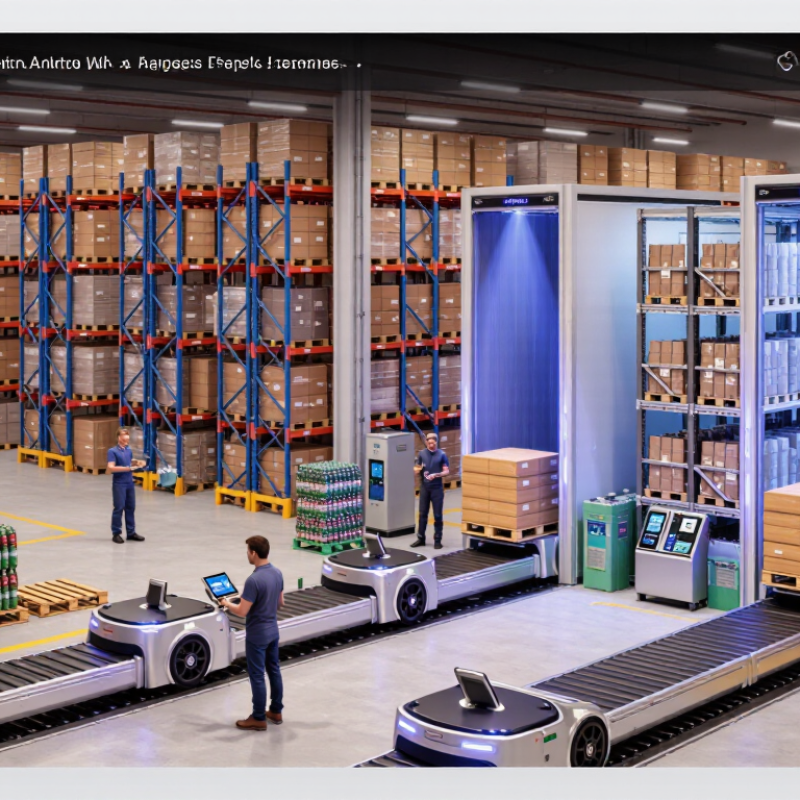
How to Choose the Right Shuttle Car for Your Warehouse?

Warehouse Shuttle Cars: Purpose, Types, and Core Operating Principles

How to Choose the Right Shuttle Car for Your Warehouse?

Warehouse Shuttle Cars: Purpose, Types, and Core Operating Principles

A warehouse shuttle car is a motorized platform that moves pallets inside storage lanes. It reduces forklift travel and uses deep-lane space more efficiently. The system runs on rails, receives commands, and positions loads at assigned locations. Operators usually control it through a handheld device or warehouse software.

Different shuttle cars suit different workflows. A semi-automated model works well where operators load and remove pallets frequently. A fully automated version supports higher throughput and fewer manual movements. Some systems use carts for standard pallets, while others handle cartons or mixed loads. A Mining Shuttle Car serves a different environment and should not be confused with warehouse equipment.

The operating principle is straightforward. Sensors confirm pallet position, motors drive the cart, and control logic manages storage sequences. Load weight, pallet dimensions, aisle length, battery capacity, and retrieval frequency determine suitable specifications. Measure these details before comparing equipment. Small errors matter.

In practical warehouse assessments, temperature, dust, floor accuracy, and emergency access often receive too little attention. A cart may perform well during a demonstration but struggle during peak shifts. That is a useful warning. A perfect choice rarely exists. Site testing, maintenance records, operator feedback, and realistic workload data should influence the final decision. Some facilities also need manual recovery procedures when communication or power fails.

Assessing Warehouse Layout, Storage Density, and Throughput Requirements

How to Choose the Right Shuttle Car for Your Warehouse?

Choosing the right shuttle car begins with the warehouse, not the equipment brochure. Measure aisle widths, rack depths, column positions, floor flatness, and transfer-point clearances. A small survey error can create repeated stoppages. Map every storage zone, including areas for damaged or irregular pallets. Compare the car’s load rating with the heaviest actual pallet, not the average one. Safety margins matter. Check pallet conditions too. Broken boards can affect movement and sensor readings.

Storage density and throughput must be evaluated together. Deep lanes hold more inventory, but retrieval time may increase when several products share one lane. Calculate pallets received, stored, and dispatched during peak hours. Include replenishment, charging, inspections, and operator intervention. A system handling normal demand may struggle during seasonal surges. That assumption deserves testing. Use historical order data, then simulate the busiest hour. Review whether FIFO or LIFO practices match the planned lane design. A spreadsheet helps, but it cannot reveal every traffic conflict.

Tips: Mark the floor and observe vehicle paths during a busy shift. Ask operators where delays actually occur. Test the shuttle car with representative pallets, not perfect samples. Measure cycle time under realistic conditions. Measure twice. Do not judge performance by speed alone. Review maintenance access, emergency procedures, and future volume growth. A slightly slower system may prove more reliable when storage density changes. That trade-off is easy to overlook.

Matching Shuttle Car Features to Pallet Types and Load Specifications

Choosing the right shuttle car begins with the pallet, not the machine. Record pallet length, width, height, and actual load weight. Include packaging, uneven stacking, and the load center. A car rated for 1,500 kilograms may perform poorly when weight shifts during movement. Check both static and dynamic capacity. Steel pallets, plastic pallets, and damaged wooden pallets can behave differently on the rails. Measure pallet feet carefully. Small gaps can cause large problems.

Clearance matters too. Confirm aisle width, rack spacing, transfer height, and floor conditions before selection. The shuttle car must fit beneath the lowest beam without scraping. Temperature, dust, moisture, and charging conditions also affect reliability. The phrase Shuttle Car Underground Mining may suggest heavy-duty performance, but warehouse needs still require separate testing. Similar equipment does not mean identical suitability. A tidy specification sheet can still mislead.

Tips: Test the heaviest real pallet, not an ideal sample. Place a slightly off-center load on the test unit. Observe stopping, alignment, and retrieval time. Ask operators where pallets usually fail. Their practical warnings often reveal details that drawings miss. Recheck measurements after installation. Racks can settle, pallets can change, and early assumptions can age badly.

How to Choose the Right Shuttle Car for Your Warehouse?

Matching shuttle car features to pallet types and load specifications

Pallet footprints vary by region and handling system. The European pallet is typically 1,200 × 800 mm, while ISO and North American pallets are wider and require sufficient shuttle-car support width. Before selecting equipment, confirm the pallet length, width, total load weight, load-center position, rack clearance, and required safety margin. The shuttle car's rated capacity should exceed the heaviest loaded pallet in the operating cycle.

Comparing Manual, Radio-Controlled, and Automated Shuttle Systems

How to Choose the Right Shuttle Car for Your Warehouse?

Manual shuttle systems suit warehouses with modest throughput and frequent layout changes. Operators guide each shuttle into storage lanes, often using a handheld control. The setup is simple. Capital costs remain lower. However, travel speed depends on operator attention, battery discipline, and clear aisle communication. A missed pallet location can quickly create congestion.

Radio-controlled shuttles add repeatable movement without full automation. An operator can place a unit deep inside a lane, then retrieve it remotely. This works well for cold storage, high-density pallets, and facilities with limited labor.

MHI’s 2024 Annual Industry Report found that 83% of supply-chain professionals planned to increase technology investment. Labor shortages were also identified by 55% of respondents.

Those figures support automation, but not every site needs maximum complexity.

Automated shuttle systems connect storage, conveyors, and warehouse software. They deliver consistent cycles and valuable tracking data. WERC’s 2024 DC Measures report treats picking accuracy and cycle time as essential operational benchmarks; automation can improve both when master data is clean.

It can also expose weak processes. That part is uncomfortable. A poorly designed slotting plan will simply fail faster.

Before choosing, measure daily pallet moves, peak hours, aisle temperature, battery access, and recovery procedures. For unusual Car Mining workflows, test one lane first. Pilot evidence beats optimistic spreadsheets.

Evaluating Safety, Integration, Maintenance, and Energy Requirements

Choosing a shuttle car starts with safety, not storage density. On real warehouse floors, narrow aisles expose weak designs quickly. Check load stability, collision sensors, emergency stops, and safe access zones. The vehicle should stop smoothly when a worker enters its path. Test these functions with uneven pallets and changing floor conditions. A Mining Car is built for harsh extraction environments, so it should not be selected automatically for warehouse use. Different loads need different protection.

Integration affects daily productivity. Confirm that the shuttle car communicates reliably with the warehouse management system and control software. Ask for documented interfaces, response times, and offline procedures. A short integration test can reveal delays that brochures never mention. Maintenance access also matters. Technicians should reach batteries, wheels, sensors, and control panels without dismantling half the machine. Keep spare parts lists, service records, and inspection intervals visible. Some plans look excellent on paper. They still fail beside a busy loading dock.

Tips: Measure peak traffic, not average traffic. Compare battery runtime during real shifts. Check charging time, heat, and replacement cost. Leave space for safe maintenance. Ask operators what feels awkward. Their feedback may expose a design weakness early. Energy use should match working patterns, including pauses, cold areas, and frequent acceleration. A smaller battery may reduce weight, but it could create more charging interruptions. That trade-off deserves careful testing.

How to Choose the Right Shuttle Car for Your Warehouse? - Evaluating Safety, Integration, Maintenance, and Energy Requirements
Evaluation Dimension Rail-Guided Pallet Shuttle Four-Way Pallet Shuttle Tote or Carton Shuttle Selection Guidance
Typical Application High-density storage of uniform pallets in deep lanes. High-density pallet storage with multiple entry and exit points. High-throughput storage and retrieval of totes, cartons, and small containers. Match the shuttle format to the load unit, order profile, and required storage density.
Typical Load Capacity Approximately 1,000–1,500 kg per pallet, depending on rack design and load dimensions. Approximately 1,000–1,500 kg per pallet, with capacity determined by the vehicle and rail system. Approximately 30–100 kg per tote or carton, depending on the conveyor and storage structure. Confirm the maximum gross load, load-center position, pallet quality, and allowable rack deflection.
Storage Density High
Reduces aisle space and supports deep-lane storage.
Very High
Can serve multiple lanes and directions with fewer fixed aisles.
High
Uses vertical space effectively for smaller load units.
Use density as a priority when land cost is high, but verify fire protection, access, and replenishment requirements.
Throughput Profile Suitable for moderate to high pallet movements, especially in first-in-last-out operations. Suitable for high pallet throughput where flexible routing and lane access are required. Suitable for high-frequency piece picking, order consolidation, and goods-to-person workflows. Calculate required pallet or container movements per hour, including peak periods and recovery capacity.
Safety Requirements Requires rack-end guarding, lane access controls, emergency stops, pallet-presence detection, and restricted personnel access. Requires position sensors, obstacle detection, route protection, rack-end guarding, and controlled floor transitions. Requires anti-collision sensors, tote-position verification, conveyor guarding, and safe access around picking stations. Safety functions should be risk-assessed before installation and integrated with emergency-stop circuits and access doors.
Personnel Interaction Best operated in areas separated from pedestrians; manual access should be controlled and permit-based. Needs clear separation between vehicle routes, forklifts, and pedestrians because the vehicle can change direction. Usually operates in a controlled automated area, but operator stations still require ergonomic and safeguarding measures. Prioritize systems with clearly defined pedestrian zones, visual indicators, audible warnings, and lockout procedures.
Control and Integration Typically connects to a warehouse management system through a warehouse control system or material-flow controller. Requires coordinated traffic management, location tracking, route assignment, and rack-level inventory status. Usually integrates with warehouse management, warehouse control, conveyor, sortation, and goods-to-person software. Verify communication protocols, application programming interfaces, inventory transactions, alarm handling, and fallback modes.
Recommended Data Interfaces Ethernet-based industrial communication, status signals, job commands, battery data, and safety feedback. Industrial Ethernet, vehicle-location data, traffic-control commands, diagnostics, and safety interlocks. Industrial Ethernet, conveyor controls, barcode or RFID data, order messages, and workstation signals. Require documented interface specifications, event codes, timestamp rules, and data ownership before purchasing.
Battery and Charging Commonly uses rechargeable lithium-ion or lead-acid battery systems. Typical charging is scheduled during low-demand periods. Commonly uses rechargeable lithium-ion battery systems where opportunity charging and frequent travel are required. Often uses lithium-ion batteries for frequent cycles; charging may be automatic or scheduled at designated stations. Compare battery chemistry, charging time, charging location, replacement method, thermal protection, and spare-battery needs.
Energy Considerations Energy demand is influenced by vehicle mass, travel distance, acceleration, load weight, battery condition, and charging efficiency. Energy demand is generally higher when the vehicle performs long-distance travel, lifting, and directional changes. Energy demand depends on vehicle count, duty cycle, lift height, tote weight, and the number of starts and stops. Use measured energy per completed task during a pilot rather than relying only on rated motor power.
Maintenance Complexity Medium
Routine checks include wheels, drive components, sensors, battery, rails, and communication devices.
Medium to High
Additional checks may include steering, directional mechanisms, transfer interfaces, and location systems.
Medium
Requires inspection of wheels, belts or rollers, sensors, lift devices, battery, and transfer points.
Assess access to service areas, spare parts, diagnostic tools, maintenance staffing, and remote-support capability.
Routine Inspection Frequency Daily visual checks, periodic sensor and safety checks, and planned mechanical service based on operating hours. Daily visual checks plus more frequent inspection of steering, transfer, and positioning components. Daily checks of sensors and transfer points, with planned service for drive, lift, and conveyor components. Set inspection intervals according to operating hours, environmental conditions, manufacturer instructions, and incident history.
Environmental Suitability Can be designed for ambient, chilled, or frozen areas when batteries, lubricants, electronics, and seals are specified accordingly. Suitable for demanding environments when floor flatness, condensation control, corrosion protection, and battery performance are addressed. Suitable for clean, ambient, or temperature-controlled areas when electronics and materials are correctly selected. Check temperature range, humidity, dust, washdown exposure, floor condition, and corrosion risk before final selection.
Floor and Rack Requirements Needs accurately aligned rails, stable rack geometry, suitable clearances, and a level floor at transfer areas. Needs precise floor flatness, durable travel surfaces, accurate rack alignment, and adequate turning or transfer clearances. Needs level conveyor interfaces, accurate storage locations, suitable rack tolerances, and stable support for containers. Conduct a site survey covering floor flatness, rack tolerances, clear heights, column positions, and fire-protection equipment.
Best Inventory Strategy Best for high-volume SKUs with predictable replenishment and limited SKU variety per lane. Best for mixed routing requirements, high storage density, and operations needing access from more than one direction. Best for many small SKUs, high order-line volumes, batch picking, and frequent item-level replenishment. Choose the system that supports the required inventory rotation, slotting method, and replenishment frequency.
Capital and Operating Trade-Off Usually offers a simpler vehicle concept, but requires dedicated deep-lane rack infrastructure. May provide greater layout flexibility, but involves more complex navigation, control, and maintenance requirements. Can deliver high item throughput, but requires coordinated conveyors, storage levels, software, and workstations. Compare total cost of ownership, including rack modifications, software, batteries, labor, maintenance, energy, and downtime.
Recommended Use When Uniform pallet loads, high storage density, predictable flows, and limited need for lane cross-access are priorities. Flexible pallet routing, high density, multiple access points, and reduced dependence on fixed aisles are priorities. Fast container handling, item-level fulfillment, high order frequency, and ergonomic picking are priorities. Use throughput simulations and a site-specific risk assessment before selecting the final shuttle configuration.
Data basis: The capacity, speed, battery, and application ranges shown are indicative engineering ranges commonly used for preliminary warehouse planning. Final values must be confirmed through a site survey, load analysis, safety risk assessment, throughput simulation, and equipment specification review.

Calculating Total Cost, Scalability, and Long-Term Warehouse Value

How to Choose the Right Shuttle Car for Your Warehouse?

A shuttle car should be evaluated by total cost, not purchase price alone. During a warehouse assessment, I calculate installation, controls, batteries, spare parts, training, inspections, and software support. Downtime also deserves a cost value. One stopped aisle can delay picking, replenishment, and dispatch for hours. Labor savings may look attractive, but they should be tested against actual shift patterns and order volumes. Use three-year and ten-year calculations. Short-term savings can mislead.

Scalability matters when inventory changes. Measure available pallet positions, lane depth, load weight, and daily movements. Then model a 20% volume increase. Can the system add shuttle cars without rebuilding racks or stopping operations? Check whether charging areas, network capacity, and maintenance access can expand safely. A small pilot with real pallets often reveals problems that spreadsheets miss. That evidence is valuable.

Long-term warehouse value depends on reliability and flexibility. Ask for service response times, spare-part availability, preventive maintenance requirements, and performance records from comparable operations. Last year, our labor forecast was too optimistic because seasonal absences were ignored. The lesson was uncomfortable but useful. Recheck every assumption. A shuttle car that performs consistently, adapts to new storage profiles, and reduces avoidable handling can support value for many years. However, overcapacity is wasteful. The best choice leaves room to grow without paying for unused automation today.

FAQS

What is a warehouse shuttle car?

It is a motorized platform that moves pallets through storage lanes. It runs on rails and follows commands from controls or warehouse software. It reduces forklift travel. Small errors matter.

How does a shuttle car operate?

Sensors check pallet position and lane conditions. Motors move the platform to assigned locations. Control logic manages storage and retrieval sequences. Operators may use handheld controls. Power or communication failures still require manual recovery plans.

Which warehouse layout details should be measured?

Measure aisle width, rack depth, column positions, and floor flatness. Check transfer-point clearance and emergency access. Mark vehicle paths during a busy shift. A minor survey error can cause repeated stoppages. Measure twice.

How should storage density and throughput be evaluated?

Count pallets received, stored, and dispatched during peak hours. Include charging, inspections, replenishment, and operator intervention. Deep lanes increase capacity but may slow retrieval. Simulate the busiest hour, not only average demand. Normal performance can be misleading.

What pallet information is important before choosing equipment?

Record pallet length, width, height, and actual loaded weight. Include packaging, uneven stacking, and the load center. Check pallet feet and underside gaps. Damaged wooden pallets may move differently from plastic pallets. Test real pallets.

How can load capacity be checked safely?

Compare the equipment rating with the heaviest actual pallet. Review both static and dynamic capacity. Test an off-center load under controlled conditions. Observe stopping, alignment, and retrieval time. A perfect sample proves little.

Which environmental conditions affect shuttle car reliability?

Temperature, dust, moisture, floor accuracy, and charging conditions all matter. Confirm the platform fits below the lowest rack beam. Inspect areas where dust may collect near sensors. A clean demonstration may hide harsh shift conditions. That is worth questioning.

What should be reviewed before final selection?

Review maintenance access, emergency procedures, and future volume growth. Ask operators where delays and pallet failures usually occur. Use site testing, maintenance records, and realistic workload data. A slightly slower system may remain more reliable later. No choice is perfect.

Conclusion

Choosing the right Shuttle Car is essential for creating a warehouse storage system that is efficient, safe, and adaptable. The selection process begins by understanding how shuttle cars work and comparing manual, radio-controlled, and automated models. Warehouse layout, aisle dimensions, storage density, pallet flow, and required throughput should all be evaluated before making a decision. These factors help determine whether the system can support current operations while improving space utilization and order-handling speed.

It is also important to match the Shuttle Car with pallet sizes, load weights, and operating conditions. Safety functions, control-system integration, maintenance access, battery performance, and energy consumption can significantly affect daily reliability. Finally, businesses should compare purchase, installation, training, maintenance, and future expansion costs rather than focusing only on the initial investment. A well-planned Shuttle Car solution should provide scalable performance, reduce handling requirements, and deliver long-term value as warehouse demands change.
Isabella

Isabella

Isabella is an accomplished marketing professional with a deep expertise in high-tech mining solutions. With a keen understanding of the intricacies of trackless mining equipment, she plays a pivotal role in showcasing the company’s innovative products, including underground loaders, mining trucks,......
Previous 10 Road Header Buying Tips for Global Buyers?