Leave Your Message
0%

Picking out a Road Header isn’t just about grabbing the one with the biggest cutting motor. Honestly, every project around the world is different—geology, tunnel size, power setups, regulations, and what kind of support is available can all vary greatly. So, a machine that slices through hard limestone like butter might totally struggle when faced with abrasive sandstone or mixed ground conditions. The details really do matter here.

Dr. Nick Barton, who's pretty much a rock engineering legend, suggests a simple but solid rule: “The rock mass should guide your excavation method.” Before you start comparing quotes, make sure to ask for geological reports, data on how strong the rock is (like uniaxial compressive strength), abrasiveness tests, and groundwater info. Also, look at things like the cutting head design, boom reach, machine width, how much it can load, dust suppression, operator visibility, and emergency features. And don’t just go for shiny brochures—you want concrete, measurable performance figures.

A trustworthy supplier should be able to give you a clear idea of the typical advance rates you can expect in similar conditions. It’s a good idea to ask for references from projects with similar tunnel sizes and rock types. Don’t forget to check their maintenance records, how long spare parts take to arrive, training support, and whether they offer remote technical help. Things like voltage, frequency, transport dimensions, and who handles commissioning should also be clarified early on—these practical issues can completely derail your project faster than a machine that’s just not powerful enough.

A lot of folks tend to focus too much on the purchase price — big mistake. Over time, things like downtime, cutter replacements, fuel or electricity costs, and the need for skilled operators can end up costing way more than the initial price. Sometimes, a cheaper Road Header can turn out to be pricey if support is hard to get when you need it. But hey, no forecast is perfect: ground conditions change, and your planned production might fall short. Smart buyers leave some wiggle room for surprises, make sure to document their assumptions, and compare total ownership costs—not just the sticker price—before making a decision. Remember, the best choice isn’t necessarily the most powerful machine. It’s the one that’s most suitable, easy to support, and honestly detailed when it comes to specifications.
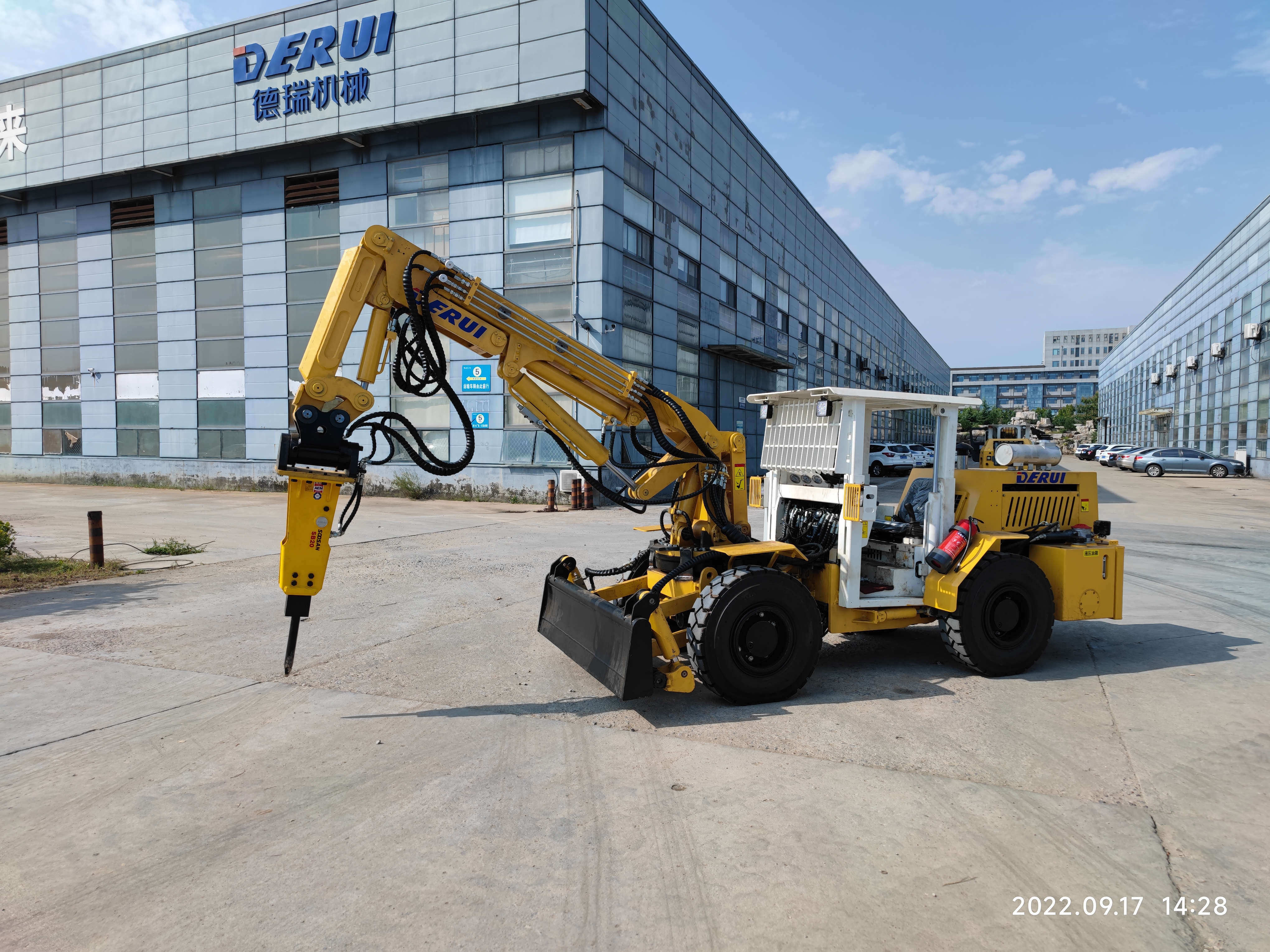
IMG_20220917_142830.jpg

Assess Rock Strength: Select Cutterheads for 50–150 MPa UCS

10 Road Header Buying Tips for Global Buyers

Assess Rock Strength: Select Cutterheads for 50–150 MPa UCS

Uniaxial compressive strength, or UCS, should guide cutterhead selection. For rock between 50 and 150 MPa, cutting performance changes sharply. The FHWA Technical Manual for Design and Construction of Road Tunnels identifies about 100 MPa as a practical screening boundary for many roadheader applications. Heavy-duty machines may approach 150 MPa, but geology decides the real limit. A neat UCS number can mislead.

Request laboratory UCS results from several faces, not one core. ISRM testing guidance supports standardized specimen preparation and loading procedures. Also check quartz content, abrasivity, bedding, moisture, and joint spacing. A 90 MPa sandstone with abrasive quartz may consume tools faster than stronger, fractured limestone. Watch the spoil. Large glowing chips, rising vibration, or falling penetration rate signal trouble.

Tips: Match the cutterhead to the rock fabric, not only its strength. Use conical picks for mixed and fractured ground, then consider stronger disc-based arrangements for persistent hard bands. Ask suppliers for verified cutting trials at 50, 100, and 150 MPa UCS. Include tool consumption, penetration rate, dust control, and downtime in the comparison. Road Mining projects often underestimate maintenance access. That mistake is expensive. Recheck assumptions after the first 20 metres; field results may challenge the laboratory report.

10 Roadheader Buying Tips for Global Buyers: Assess Rock Strength

Indicative UCS screening bands for selecting cutterhead duty and cutting-tool configuration

How to use this chart: Unconfined compressive strength (UCS) is a key indicator of rock-cutting difficulty. For rock between 50 and 100 MPa, a standard heavy-duty cutterhead with appropriately spaced carbide picks is commonly considered during initial selection. For 100–150 MPa rock, buyers should evaluate reinforced cutterheads, stronger pick holders, improved dust control, and closer tool monitoring. Final selection should be verified through geological investigation, laboratory testing, and a cutting or field trial because abrasivity, jointing, moisture, and quartz content also affect performance.

Size Cutting Power: Compare 100–400 kW Installed Motor Ratings

10 Road Header Buying Tips for Global Buyers

Size Cutting Power: Compare 100–400 kW Installed Motor Ratings

Installed motor power is a starting point, not a production guarantee. A 100 kW road header suits lighter headings and softer rock. Machines near 400 kW can attack stronger formations, but they also demand better cooling, electrical supply, and ground control. The International Energy Agency reported global coal demand above 8.5 billion tonnes in 2023, showing continued pressure for efficient underground development. That scale does not make higher power automatically better.

Compare cutting power with rock strength, cutter-head torque, and specific energy. The International Society for Rock Mechanics recommends laboratory testing for strength and abrasivity before equipment selection. Ask for uniaxial compressive strength results, not only a supplier’s power chart. A 250 kW machine may outperform a 400 kW unit in fractured rock, especially when cutter spacing matches the geology. Field trials matter.

Check the duty cycle carefully. Installed power may include motors that rarely operate at full load. Review continuous power, peak torque, hydraulic losses, and ventilation requirements. The U.S. Mine Safety and Health Administration’s 2023 data continues to highlight the importance of controlling dust and equipment-related risks underground. More power can increase heat and dust if extraction is weak. That is often overlooked.

I would also compare cable size, transformer capacity, service access, and daily cutting hours. Bigger is not always wiser. A careful buyer should request measured advance rates from similar rock, with downtime included. Those figures may look less impressive, but they are usually more honest.

Verify Geometry: Match Boom Reach and Machine Width to Tunnel Profiles

10 Road Header Buying Tips for Global Buyers

Verify geometry before comparing cutting power or purchase price. Measure the tunnel profile at several chainages, not only from one drawing. Confirm the boom reach, cutting height, and lateral swing against the actual excavation envelope. A machine may reach the crown but leave uncut zones near the shoulders.

Machine width matters underground. Include the cutting head, protective structures, cables, water lines, and temporary attachments in the measurement. Compare the full operating width with the narrowest tunnel section. Allow working clearance for uneven walls and steering corrections. Tight geometry creates delays.

Tips: Request a scaled machine-profile drawing. Mark the maximum boom position. Check crown, sidewall, floor, and turning clearance. Ask for reach data under realistic boom angles, not only ideal conditions. Review transport width separately from cutting width. Confirm the machine can reverse safely around bends and cross passages.

Site experience shows that tunnel profiles rarely match design drawings perfectly. Rock overbreak, shotcrete thickness, and floor buildup can reduce clearance by several centimeters. That difference is significant. A compact machine may fit on paper yet struggle during relocation. Recheck measurements after support installation. This step is often skipped. It should not be.

Leave room for uncertainty. Survey errors, worn components, and operator positioning can change the usable envelope. Discuss these limits with engineers, operators, and maintenance personnel before signing technical documents. Their practical feedback may challenge the original selection, which is useful. Geometry should be verified in the tunnel, not assumed from a brochure.

Check Production: Benchmark m³/h Against Conveyor Capacity and Haulage

When buying a road header, check production against the complete material-handling system. A claimed output in m³/h is only a starting point. Confirm whether it describes loose volume, solid rock volume, or an ideal laboratory result. These measurements can differ sharply.

Watch the cutting head during a timed trial. Record the material volume, rock hardness, dust conditions, and stoppages. Then compare the result with conveyor capacity. If the machine cuts 180 m³/h, but the conveyor moves only 120 m³/h, production will wait underground. It happens often.

Haulage creates another limit. Check truck payload, loading time, travel distance, road gradient, and return cycle. Bulk density and swell factor also change the real payload. A 20-minute loading cycle may look acceptable until traffic delays add another ten minutes. Small delays become expensive over a full shift.

Ask for production data from conditions similar to your project. Better evidence includes shift records, not only sales estimates. During site trials, measure usable output after cutter changes, repositioning, cleanup, and conveyor interruptions. A practical efficiency rate may be 55–75 percent, depending on the operation. That range is not universal.

Do not size the conveyor exactly to the cutting rate. A modest buffer helps absorb uneven rock flow. Yet an oversized conveyor can increase cost without improving excavation. I have seen buyers focus on peak m³/h and overlook haulage capacity. That mistake deserves a second calculation.

Control Dust and Noise: Specify Water Suppression and ISO 19296 Compliance

Road header selection should treat dust and noise as production controls, not optional accessories. Cutting dry rock can cloud the operator’s view within seconds. Water suppression should match cutter power, geology, and ventilation. Specify adjustable spray bars, protected nozzles, flow monitoring, and an automatic low-flow alarm. Ask for measured water consumption under representative cutting conditions. Too much water creates mud, slipping hazards, and costly cleanup. Too little water leaves airborne dust. The practical mistake is trusting a catalogue diagram. Inspect nozzle access and drain paths before purchase.


NIOSH’s Criteria for a Recommended Standard: Occupational Noise Exposure recommends 85 dBA over eight hours. It uses a 3 dB exchange rate. Measure noise at the operator position during realistic cutting. Also check surrounding work areas. Use competent laboratories and record the test method.

ISO 19296:2018 addresses safety requirements and verification for underground mobile machines. It does not, by itself, certify dust suppression or guarantee a specific noise limit. Request conformity evidence, risk assessments, guarding details, and water-system test records. Check controls from the cab. Remote monitoring helps, but it cannot replace inspection. The ILO estimated 2.93 million work-related deaths in 2019, including 2.6 million from work-related diseases. A clean factory test can still mislead. Treat missing field data as a buying risk.

Audit Safety: Require IEC 60204-1 Conformity and SIL-Rated Controls

10 Road Header Buying Tips for Global Buyers

Audit safety before comparing cutting power or production rates. Require documented conformity with IEC 60204-1 for the machine’s electrical equipment. Review the electrical drawings, protective bonding records, emergency-stop circuits, enclosure ratings, and voltage compatibility. Ask for inspection and test results, not only a certificate. A clean control cabinet helps, but it does not prove safe design. Check wire labels physically during a factory visit. Small details matter.

Tips: Request the machinery risk assessment and safety-function list. Confirm which functions require SIL-rated controls, such as emergency stopping, access-door monitoring, or hydraulic pressure protection. SIL is not a decorative label. Verify the claimed SIL level, safety architecture, diagnostic coverage, PFH or PFD data, and validation records. The control system should match the assessed risk and operating environment. Also ask who performs proof testing and how often.

Do not assume IEC 60204-1 conformity covers every regional requirement. Local electrical rules may add inspection or documentation duties. Confirm language, operator training, spare-part traceability, and maintenance access before signing. In practice, buyers sometimes focus on the main controller and overlook remote I/O, sensors, or restart behavior. That is a mistake worth revisiting. A realistic audit includes wet, dusty, and low-visibility conditions. Safety performance must remain dependable there.

Calculate Lifetime Cost: Compare Energy, Wear Parts, Service, and Uptime

The purchase price is only one part of a roadheader’s lifetime cost. Global buyers should calculate energy, wear parts, service, and uptime together. Record installed power, average load, cutting hours, and local electricity rates. A 250 kW machine may not consume 250 kWh every hour, because cutting conditions change. Use real shift data when possible. Catalog figures are useful, but incomplete.

Cutters, picks, holders, and cutting heads can become major expenses in abrasive rock. Ask for wear data from comparable formations, not only laboratory tests. Price each replacement set, including transport and delivery delays. Import costs and local inventory requirements can also affect the final number. My early estimates often missed small components, such as seals and hydraulic filters. Those details later became expensive.

Service costs include technicians, travel, training, diagnostics, and software support. Measure the financial effect of downtime by calculating lost meters per hour and delayed production. One idle shift may cost more than several replacement parts. Compare warranty terms, response times, and technician availability in writing. Experienced maintenance teams should test service access during a site inspection. A low-cost machine can become costly when a minor fault waits weeks for support. Leave some budget for uncertainty. Real projects rarely follow the spreadsheet perfectly.

10 Road Header Buying Tips for Global Buyers? – Calculate Lifetime Cost: Compare Energy, Wear Parts, Service, and Uptime

Use the following planning benchmarks to compare road headers on a like-for-like basis. Actual results depend on rock strength, abrasivity, cutting profile, operator skill, ventilation, duty cycle, local energy prices, and service conditions.

No. Buying Tip Key Metric to Compare Indicative Benchmark or Target Lifetime-Cost Impact Evidence to Request Before Purchase
1 Calculate energy cost per cubic metre Specific energy consumption Typical planning range: 7–12 kWh/m³ of excavated material under continuous cutting conditions. At USD 0.14/kWh, a 2 kWh/m³ difference changes energy cost by approximately USD 0.28/m³. At 100,000 m³ per year, this equals about USD 28,000 per year. Request measured power readings, cutting-cycle data, installed motor power, and test results from rock conditions comparable to the project.
2 Compare cutting-tool consumption, not only tool price Wear-part cost per cubic metre A practical budgeting range is USD 3–7/m³, with abrasive and hard rock conditions often at the upper end. A USD 1.50/m³ improvement saves approximately USD 1.2 million over 1,000,000 m³ of production. Request tool-life records, average replacement intervals, holder and pick specifications, and wear-part consumption by rock type.
3 Evaluate the complete cutting system Cutting-head design and replaceability Verify cutting-head configuration for the planned profile, material strength, abrasivity, and maximum cutting height and width. A suitable head can reduce overloads, vibration, tool breakage, and unplanned stoppages. Cutting-head changes should be assessed as a capital and downtime cost. Request cutting-head drawings, tool layout, allowable rock-strength range, replacement procedure, and expected change-out time.
4 Measure service cost per productive hour Planned maintenance cost For preliminary budgeting, use approximately USD 1.5–3.0 per m³ for scheduled service, lubricants, filters, and routine inspections. Over 1,000,000 m³, every USD 0.50/m³ difference in scheduled maintenance equals USD 500,000. Request maintenance schedules, labor-hour requirements, lubricant volumes, filter intervals, recommended inspections, and service-hour rates.
5 Use mechanical availability instead of brochure output Mechanical availability A realistic planning range for an established operation is approximately 82–90%, depending on maintenance quality and ground conditions. Raising availability from 84% to 88% adds approximately 4 percentage points of scheduled operating time. The value depends on the project’s contribution margin and advance rate. Request fleet availability definitions, downtime coding, mean time between failures, mean time to repair, and reference duty-cycle records.
6 Price critical spares and lead times Critical spare-parts exposure Identify high-risk components such as gearboxes, hydraulic pumps, motors, control modules, conveyors, and cutting-head assemblies. A long-lead component can create weeks of lost production. Include an initial critical-spares package commonly valued at approximately 3–8% of machine purchase price. Request a two-year spare-parts price list, recommended stock list, supply lead times, interchangeability details, and regional warehouse coverage.
7 Check dust, ventilation, and water requirements Ancillary operating demand Confirm water flow, spray pressure, dust-suppression performance, ventilation demand, cable length, and transformer or generator compatibility. Insufficient dust control can increase maintenance, worker exposure, and stoppage risk. Ancillary power and water costs should be included in the energy and infrastructure budget. Request water-consumption data, dust-control test results, electrical-load diagrams, ventilation assumptions, and minimum utility specifications.
8 Verify operator and maintenance requirements Training hours and staffing Plan formal operator training, maintenance training, and supervised commissioning. Actual staffing depends on shift pattern and local regulations. Better operating practice can improve cutting-tool life, reduce overload events, and shorten fault diagnosis time. Include training, travel, translation, and shift coverage in total cost. Request training syllabus, competency requirements, diagnostic-tool training, manuals in the required language, and commissioning support terms.
9 Compare warranty and field-service response Warranty coverage and response time Compare warranty duration, operating-hour limits, exclusions, remote diagnostics, and target response times for critical failures. A warranty with broad exclusions may transfer major repair risk to the buyer. Value the difference using expected downtime, technician travel, freight, and replacement-part costs. Request the complete warranty document, claim process, response-time commitments, service network map, and examples of covered repairs.
10 Build a discounted lifetime-cost model Total cost per productive cubic metre Include purchase price, energy, wear parts, scheduled service, critical spares, major repairs, residual value, downtime, and financing or discount rate. Illustrative 8-year model: USD 1.50 million purchase price + USD 1.12 million energy + USD 3.60 million wear parts + USD 1.76 million scheduled service = USD 7.98 million, or USD 9.98/m³ over 800,000 m³. Request a machine-specific cost model with transparent assumptions, sensitivity analysis for energy and wear rates, expected availability, and end-of-life value.
Recommended comparison formula: Lifetime Cost per m³ = (Purchase Price + Energy Cost + Wear Parts + Scheduled Service + Major Repairs + Downtime Cost − Residual Value) ÷ Total Productive Volume
Planning example assumptions: 100,000 m³ of productive output per year, 8-year service life, USD 0.14/kWh electricity, 10 kWh/m³ energy consumption, USD 4.50/m³ wear-part cost, and USD 2.20/m³ scheduled-service cost. Values are for comparative budgeting and should be replaced with project test data.

FAQS

Why should tunnel geometry be checked before cutting power?

A powerful machine may still leave uncut zones near the shoulders. Verify the working envelope first.

How should tunnel dimensions be measured?

Measure several chainages, not one drawing. Check the crown, sidewalls, floor, and turning areas.

Which machine dimensions require special attention?

Compare boom reach, cutting height, lateral swing, and full operating width. Include cables and protective structures.

Why is working clearance important?

Uneven walls require correction space. Shotcrete and floor buildup can remove several centimeters of clearance.

What documents should buyers request?

Request a scaled machine-profile drawing. Mark maximum boom positions and realistic reach angles.

Can transport width replace cutting-width measurements?

No. Transport width and cutting width serve different purposes. Review both measurements separately.

What should be checked during relocation?

Confirm safe reversing around bends and through cross passages. A compact machine may still struggle underground.

What electrical safety evidence should be reviewed?

Request electrical drawings, bonding records, emergency-stop tests, enclosure ratings, and voltage information. A clean cabinet proves little.

What does a safety-function review include?

Check emergency stopping, access-door monitoring, and hydraulic protection. Verify the claimed safety level and validation records.

When should the final selection be questioned?

Recheck measurements after support installation. Ask operators and maintenance staff for practical criticism. Their feedback may expose weak assumptions.

Conclusion

Choosing the right Road Header requires a structured assessment of geological, technical, operational, and financial requirements. Start by evaluating rock strength, especially uniaxial compressive strength between 50 and 150 MPa, then select a suitable cutterhead and compare installed motor power in the 100–400 kW range. Machine geometry is equally important: boom reach, overall width, and maneuverability should match the tunnel profile and excavation limits. Expected production should be measured in cubic meters per hour and aligned with conveyor capacity and haulage planning to prevent bottlenecks.

For a reliable project, dust and noise controls should include effective water suppression and compliance with applicable ISO 19296 requirements. Safety reviews should verify IEC 60204-1 conformity and appropriately rated control systems. Finally, compare lifetime cost rather than purchase price alone, including energy use, cutting tools, maintenance, service support, downtime, and expected uptime. This approach helps global buyers select equipment that delivers safe, efficient, and predictable performance.
Ethan

Ethan

Ethan is a dedicated marketing professional at a leading high-tech enterprise specializing in trackless mining equipment. With a deep understanding of the industry, he plays a pivotal role in showcasing the company’s innovative products, which include underground loaders, mining trucks, scaling......
Previous 2026 Top Types of Loading Trucks for Global Buyers?